
I mentioned recently that I’d just taught myself mattress stitch, which . . . is poor planning on my part. Which is definitely a thing I’m prone to doing. I tend to think things through enough to decide a course of action, then I’m set on that course, and nothing will make me deviate. Sometimes not even proof it’s wrong. (See: strengths, Strategic, which is not always all that strategic in practice.)
Other people talked about seaming sweaters over the years like it was a minor annoyance, while I deliberately sought out sweater patterns with no seams, because whenever I had to seam a sweater, it just came out looking wrong. I’d just whip-stitch the right spots, and it came out messy and . . . calling it imperfect would be an insult to imperfection. It was a disaster. I don’t have any great pictures, and I’ve gotten rid of the last offending sweater, which is too bad, because properly seamed, it would have been lovely.
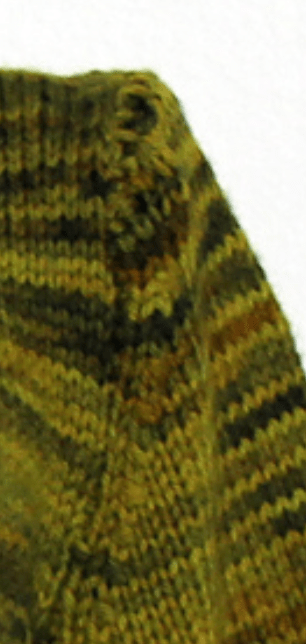
On the right is the best picture I have of the shoulder seam, which is hard to see, but I think it proves my point nicely: Isolinde was no longer allowed to seam sweaters after this. Miles of raglan shaping was my sweater-knitting life. That was okay, because I like raglan shaping, but it was also really limiting for what I was and wasn’t able to knit, so last week I decided to fix this problem, and took to my knitting library.
It turns out that yes, I was missing something incredibly simple that would have fixed everything right up. In fact, it turns out that seaming sweaters is way simpler than I thought. Coming from a background of sewing, I automatically turned right sides to face each other when seaming, and with sweaters? You don’t have to do that. You can work on the right side of the fabric, and when you’re finished, the seam turns to the inside automatically.
This video is from Very Pink Knits, and Staci shows you in three minutes how to fix a problem I had for years:
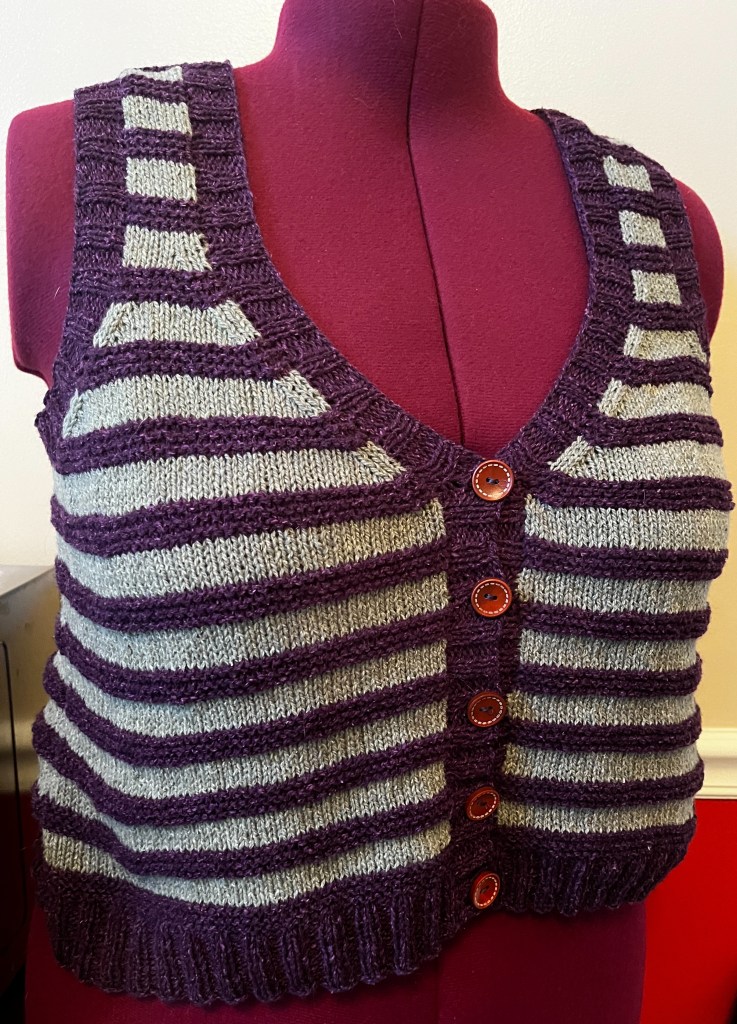
After figuring out the best way to do this, I jumped in and seamed a vest I’d made, and I think it turned out pretty darn well. You can’t see the seam, but it IS in the picture, which I think is rather the point. Buttons and their placement is still a problem area, but hey, one step at a time!
 Knitting Over the Rainbow